
Delhi to Char Dham Tempo Traveller
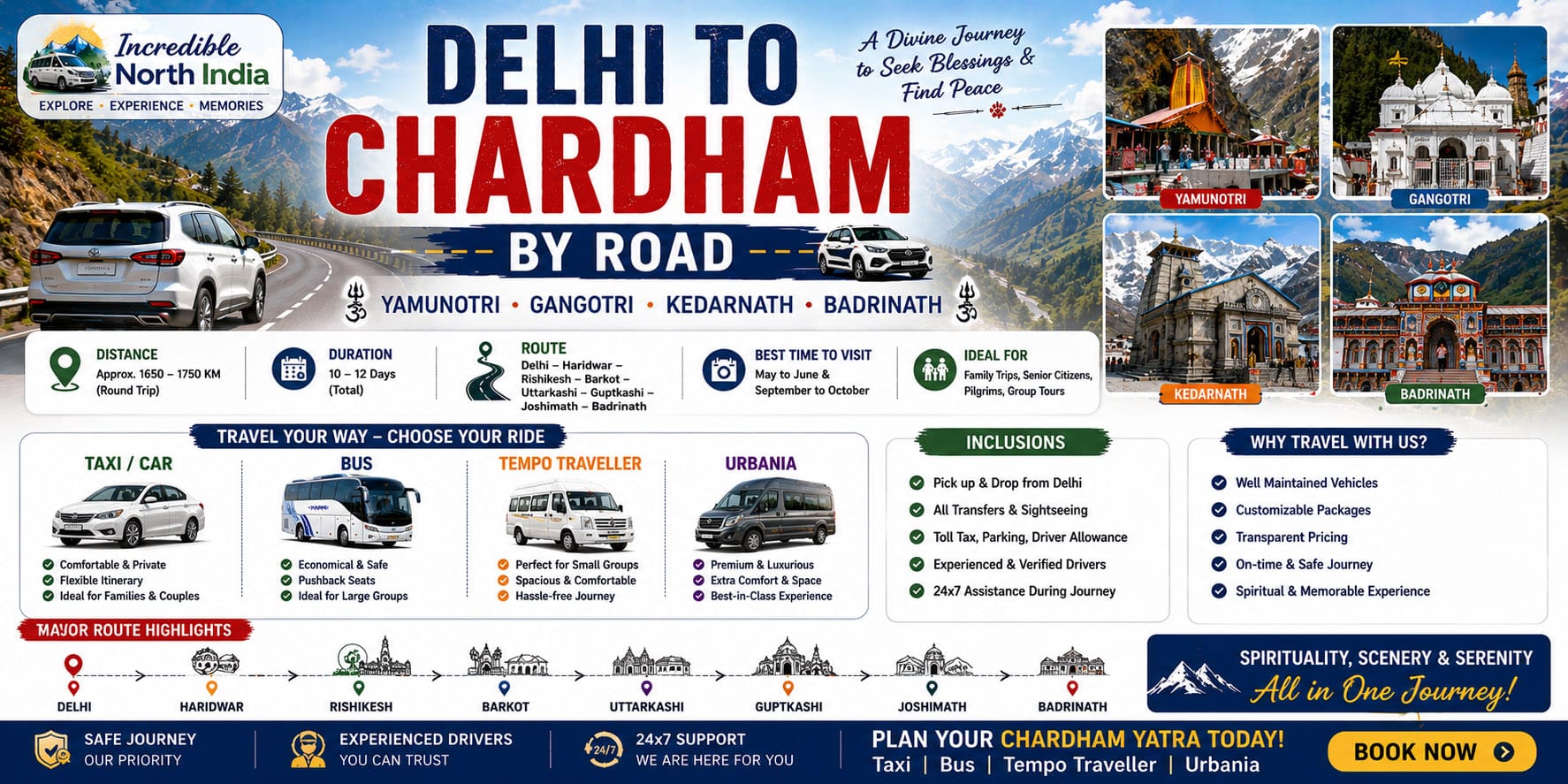
A Delhi to Char Dham Tempo Traveller is planned as a multi-day pilgrimage circuit, not a single sightseeing transfer. The vehicle must be selected around long mountain stages, luggage, senior travellers, authorised parking and the separate trek or local transport arrangements at each shrine.
 Route planning guide
Is a Tempo Traveller right for Delhi to Char Dham?
It suits a family or pilgrimage group that wants one coordinated vehicle and a driver for the road circuit. The most important planning step is a realistic day-by-day route with registration, hotel halts, weather buffers and the understanding that no vehicle reaches every shrine entrance.
Typical route: Delhi → Haridwar → Barkot → Yamunotri → Uttarkashi → Gangotri → Guptkashi/Sitapur → Kedarnath sector → Joshimath/Badrinath → Rishikesh → Delhi.
Yamunotri and Kedarnath involve trek or authorised local arrangements, while access around shrine towns can be regulated. Confirm the current pilgrimage registration, road, parking, shuttle and weather instructions before departure.
Delhi to Char Dham route and access points
Distances and journey times are planning estimates. Traffic, weather, road controls and sightseeing can change the final schedule.
01 · Delhi to Haridwar gateway
Use Haridwar or Rishikesh as the operational start of the circuit. Check documents, luggage, hotel check-in and any current registration requirement.
02 · Yamunotri and Barkot sector
The vehicle covers the road journey to the practical base, while the shrine approach uses authorised local arrangements or a trek according to current rules.
03 · Gangotri and Uttarkashi sector
Keep a full day for the mountain road and plan rest for senior travellers. Road controls and weather can change the order.
04 · Kedarnath and Badrinath sectors
These stages need separate local planning, hotel confirmation and buffer time. Vehicle parking, shuttle points and shrine access are not interchangeable.
A practical Char Dham group itinerary
Use this as a starting point; final timings should follow your pickup points, hotel access, permits and passenger needs.
Days 1–2 · Delhi to Haridwar and Barkot
Reach the gateway, complete the onward road stage with a planned halt and keep the Yamunotri base arrival realistic.
Days 3–5 · Yamunotri and Gangotri
Allow the required trek or local arrangement for Yamunotri, then move toward Uttarkashi and Gangotri only with current road and weather guidance.
Days 6–9 · Kedarnath sector
Use the confirmed base and authorised local transport or trek arrangement. Keep an extra buffer for weather, queues and return timing.
Days 10–14 · Badrinath and return
Continue through the confirmed route, keep Badrinath access and hotel parking clear, then return through a practical halt rather than forcing a long final drive.
Places and experiences to consider around Char Dham
Choose a realistic number of stops rather than promising every attraction in one day.
Yamunotri base and route
The vehicle does not replace the required shrine approach arrangement. Confirm the base, registration, local transport and walking needs before the group travels.
Gangotri
A high-altitude pilgrimage stop where weather and road conditions matter. Plan time for rest and avoid an overpacked sightseeing list.
Kedarnath sector
The road vehicle reaches the authorised base or parking area; the final shrine access follows the current trek, shuttle, helicopter or other official arrangement.
Badrinath and nearby stops
Confirm hotel approach, parking, crowd controls and the time needed for darshan before adding nearby attractions.
Choose the vehicle according to group size, luggage and road access
9–12 seater
Often comfortable for a smaller family with luggage, senior travellers and a long multi-stage plan. Confirm entry, seating and luggage features.
16–20 seater
A practical category for larger pilgrimage groups after hotel roads, parking and the route’s local transfer points are checked.
26 seater caution
A large vehicle may work on selected highway sections but can be difficult at mountain hotels, parking points and regulated shrine approaches.
Pilgrimage comfort
Prioritise easy entry, comfortable seats, luggage access, driver rest, medicine storage and a written plan for local transport.
What changes the Delhi to Char Dham Tempo Traveller cost?
A Char Dham quotation depends on vehicle category, route kilometres, number of days, local running, driver allowance, night halts, parking, tolls, taxes and the chosen hotel circuit. Trek, shuttle, helicopter, pony, entry, guide and accommodation charges are separate unless explicitly written.
Confirm as included or additional
- Vehicle and driver service for the agreed road circuit
- Tolls, parking and applicable state taxes
- Driver allowance and multi-night halt terms
- Minimum kilometres and extra-running policy
- GST and itemised billing
Send before asking for a quote
- Exact dates and passenger list
- Senior travellers, children and medical needs
- Luggage quantity and hotel names
- Yamunotri/Kedarnath local arrangement
- Return date, halt plan and final drop
Written-quote rule: Compare the complete inclusion list, not only a headline amount. Entry tickets, permits, safari vehicles, ropeways, local shuttles, activities and hotel rooms are separate unless explicitly written.
Best time and responsible trip planning
Season note: The pilgrimage season, shrine opening dates, monsoon, snowfall and road conditions determine the practical window. Confirm the official current status instead of relying on an old itinerary.
Access note: A Tempo Traveller does not reach every shrine entrance. The road vehicle uses authorised bases or parking points, followed by the current trek, shuttle or local transport arrangement.
- Keep identification, registration details and medicines accessible.
- Plan short walking stages and rest for senior travellers.
- Do not force a mountain drive after a long pilgrimage day.
- Check official weather, road and shrine advisories daily.
- Keep one or more buffer days for delays or closures.
Delhi to Char Dham Tempo Traveller FAQs
Can a Tempo Traveller go directly to all four Char Dham shrines?
No single vehicle reaches every shrine entrance. The road vehicle serves authorised bases or parking points, while Yamunotri and Kedarnath require the current official trek or local transport arrangement.
How many days are needed for Char Dham from Delhi?
A practical group plan commonly needs about 10–14 days, depending on the route order, shrine access, rest days, local arrangements and weather.
Which vehicle size is best for Char Dham Yatra?
A 9–12 seater can suit smaller families, while 16–20 seaters may suit larger groups. A 26-seater requires careful hotel, parking and mountain-access checks.
Are registration and local transfers included?
Only if explicitly written. Registration, shuttle, trek, helicopter, pony, guide, entry, hotel and other local charges should be confirmed separately.
Can the Char Dham itinerary change after booking?
Yes. Weather, road controls, shrine instructions and local access can require a safer order or extra halt. Build flexibility into the written plan.
What details are required for a Char Dham quote?
Share exact dates, passenger ages, medical or mobility needs, luggage, hotel plan, local arrangements, desired vehicle and final drop location.
Related Uttarakhand Tempo Traveller routes
Plan your Delhi to Char Dham group journey
Share dates, pickup, passenger count, luggage and night halts for a route-specific written quotation.
Planning references: Uttarakhand Tourism · IMD weather updates. Verify time-sensitive access before travel.