
Uttarakhand group road travel
Delhi to Rishikesh Tempo Traveller
Driver-operated 9–26 seater options for families, friends, pilgrimages and organised groups. Plan the route, luggage, halts and vehicle category around your actual journey.
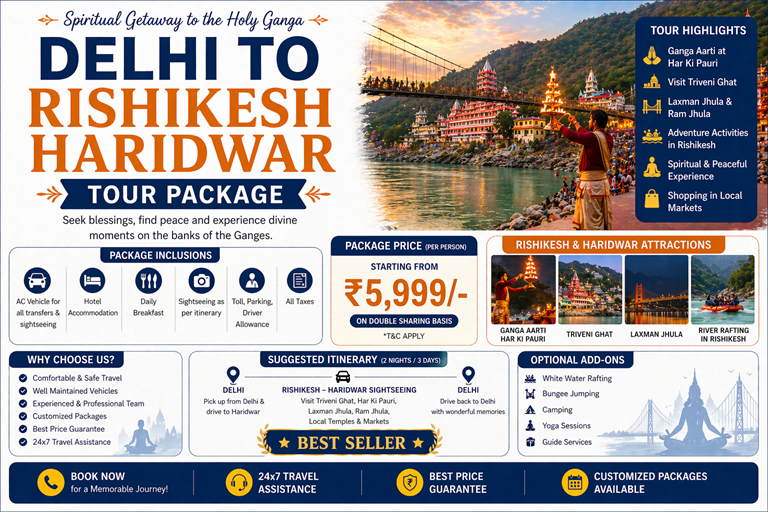
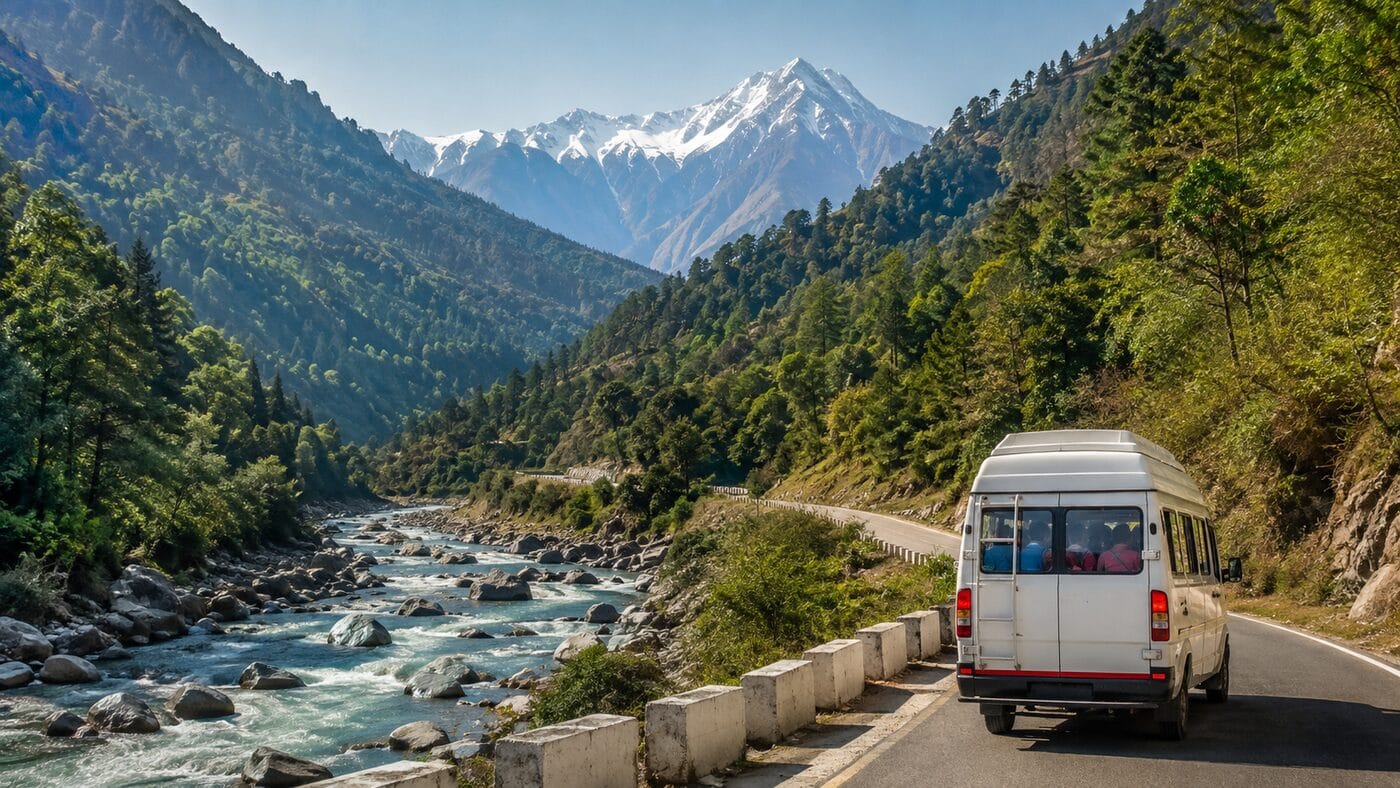
Rishikesh route and vehicle gallery
Owned and optimized site images illustrate the destination region and group-travel experience. Actual vehicle colour and model depend on the confirmed category and availability.
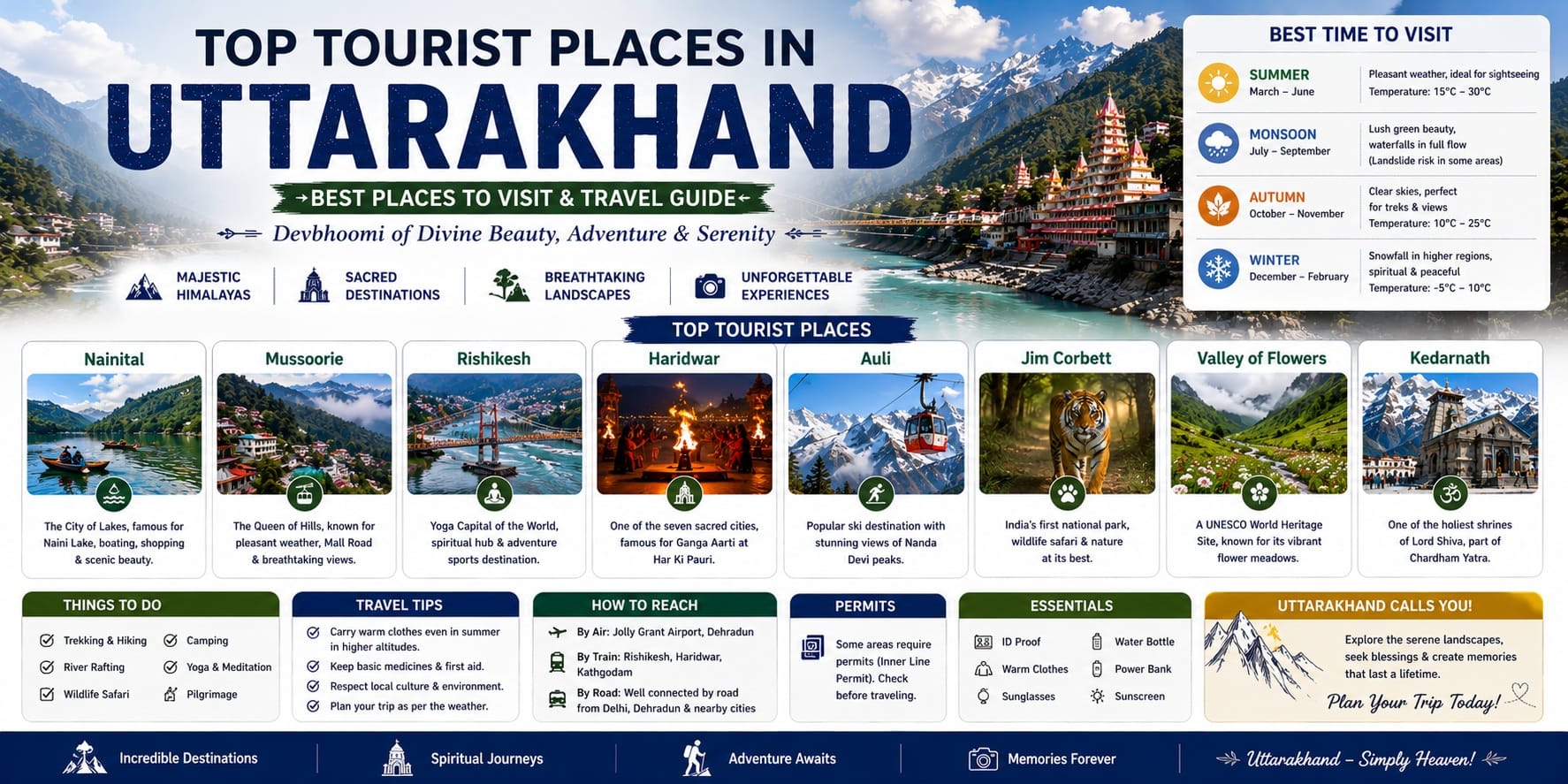

Why choose a Tempo Traveller for Rishikesh?
Rishikesh combines pilgrimage, yoga, riverside stays and adventure activities, making it suitable for mixed-age groups. Travelling together helps a group coordinate departure, meal breaks, hotel arrival and sightseeing without managing several cars. It is especially useful when children, senior citizens or first-time mountain travellers are part of the group.
The correct vehicle is not simply the one with the lowest advertised rate. Passenger count, bags, route conditions and trip length should guide the decision. A long Uttarakhand journey is usually more comfortable when every seat is not occupied and the aisle and luggage area remain clear.
- Delhi and Delhi NCR pickup planning
- One coordinated vehicle with driver
- Seating categories for different group sizes
- Local sightseeing and route stops discussed in advance
- Written inclusions and exclusions
- Custom plan based on dates and passenger needs
Delhi to Rishikesh route
The common road sequence is shown below. The driver may use a practical alternative when traffic, construction, weather, official restrictions or the confirmed pickup point makes another route more suitable.
The approximate journey is about 240 km and normally needs 5–7 hours. This is planning guidance, not a guaranteed arrival time. Add time for Delhi traffic, passenger breaks, meals, mountain movement and seasonal conditions.
Which vehicle category should your group choose?
9–12 seater
Useful for small families and friends. Keep extra room when the group has large bags or a long mountain itinerary.
16–20 seater
Suitable for medium groups, pilgrimage parties and corporate travel requiring one coordinated vehicle.
26 seater
Consider for larger groups only after confirming route access, passenger count, hotel parking and luggage arrangement.
Standard, luxury and Maharaja-style layouts can differ between individual vehicles. Request the offered category, current specifications and confirmed facilities instead of assuming that every vehicle has identical seats, entertainment or storage.
Compare detailed options on the Tempo Traveller hire in Delhi page, including links to 12, 16 and 26-seater vehicle guides.
Suggested Rishikesh group itinerary
Departure and first travel day
Start early from a central Delhi or NCR pickup point. Keep the first day focused on reaching the planned halt or destination safely. Avoid adding distant sightseeing only because it appears close on a map.
Destination and sightseeing days
Prioritise Triveni Ghat, Ram Jhula area, Beatles Ashram, Shivpuri. Group nearby places together, check local opening or access rules and keep enough time for meals, parking and boarding. Attraction tickets, adventure activities, guides and permits are separate unless the written package explicitly includes them.
Return journey
Confirm the Delhi drop location and departure time a day in advance. The return should allow for road conditions and driver rest. A late hotel checkout combined with a long mountain drive can create an unnecessarily tiring arrival.
Delhi to Rishikesh Tempo Traveller fare factors
Rates vary by seating category, date, total kilometres, minimum daily running, number of days and seasonal availability. For an accurate estimate, send the complete round-trip plan instead of asking only for a per-kilometre number.
| Quote item | What to confirm | Why it matters |
|---|---|---|
| Vehicle category | Capacity, layout and confirmed facilities | Similar names can describe different vehicles |
| Distance and days | Garage calculation, minimum running and itinerary | These usually form the base rental |
| Route expenses | Tolls, parking, permits and state taxes | They may be additional |
| Driver terms | Allowance, night halt and duty timing | Long routes require realistic rest |
| Payment terms | Advance, balance and cancellation conditions | Keep confirmation in writing |
Do not rely on a copied competitor price or an unsupported “lowest fare” claim. Vehicle availability and actual business rates can change. Read the booking and cancellation policy and request a current written quotation.
Best time and practical travel planning
Season guidance: October to April for pleasant weather; rafting availability depends on season and official conditions.
Large vehicles may have limited access near narrow lanes and some riverside stays, so confirm the hotel approach before travel. Check official tourism, registration, weather and road notices near the travel date. Mountain plans should remain flexible when safety or access conditions change.
Information needed for a useful quote
- Travel and return dates
- Delhi or NCR pickup area
- Adults, children and senior citizens
- Large luggage and special equipment
- Hotel names or planned night halts
- Main sightseeing and route stops
- Preferred seating category
- Mobility or boarding requirements
Group safety and comfort
Keep the aisle clear, store heavy luggage securely and use available seat belts. Plan regular breaks on long journeys without building an unrealistic schedule. Passengers with medical or mobility requirements should seek appropriate advice and confirm whether the offered vehicle is suitable before booking.
How to plan the Delhi to Rishikesh journey properly
This section turns the basic route into a practical group-travel plan.
Because Rishikesh lies in Uttarakhand’s gateway belt, the journey is less about continuous mountain driving and more about timing Delhi NCR traffic, highway breaks and busy city approaches. Groups should still avoid an over-ambitious sightseeing list on arrival day. Religious dates, long weekends and local events can create congestion that is not visible in a simple distance estimate. A practical plan keeps the first day flexible, confirms parking with the stay and schedules the most time-sensitive visit before the crowd becomes heavy.Gateway journeys are also useful as the first stage of a longer Uttarakhand circuit. If the group plans to continue towards the hills, tell the operator before the quotation is prepared. A vehicle that is comfortable for a short city transfer may not provide the same luggage space or seating comfort for several additional mountain days. A single written itinerary should identify the night halts, local visits and final drop so that the vehicle category and distance estimate match the real plan.
The commonly planned sequence is Delhi → Meerut → Muzaffarnagar → Roorkee → Rishikesh. The approximate road distance is about 240 km and the normal planning window is 5–7 hours, but neither figure is a guaranteed arrival time. Delhi traffic, pickup spread, meal breaks, road work, weather, local controls and the final hotel approach can change the actual duration. The quotation should therefore be based on the full itinerary rather than a single distance shown online.
Delhi
The journey starts in Delhi. Keep a common reporting time and share every Delhi NCR pickup before the quote is finalised. Multiple pickups across opposite sides of the city can add considerable distance and may delay the highway departure. Loading bags, checking passenger names and confirming emergency contacts before moving reduces confusion later.
Meerut
Meerut is an important stage between Delhi and Muzaffarnagar. It is better to decide a broad break window than promise an exact minute because traffic and passenger needs can change. The driver may adjust the halt to a safer or cleaner location. Keep the aisle clear, return to the vehicle on time and avoid adding an unplanned long detour without discussing the effect on arrival.
Muzaffarnagar
Muzaffarnagar is an important stage between Meerut and Roorkee. It is better to decide a broad break window than promise an exact minute because traffic and passenger needs can change. The driver may adjust the halt to a safer or cleaner location. Keep the aisle clear, return to the vehicle on time and avoid adding an unplanned long detour without discussing the effect on arrival.
Roorkee
Roorkee is an important stage between Muzaffarnagar and Rishikesh. It is better to decide a broad break window than promise an exact minute because traffic and passenger needs can change. The driver may adjust the halt to a safer or cleaner location. Keep the aisle clear, return to the vehicle on time and avoid adding an unplanned long detour without discussing the effect on arrival.
Rishikesh
Arrival in Rishikesh should be planned around hotel access, parking and the day’s remaining sightseeing time. The driver should receive the exact property location, not only the destination name. If the stay is inside a restricted, crowded or narrow area, confirm the practical drop point and any local transfer with the hotel.
Places to consider in the Rishikesh itinerary
These highlights are planning ideas, not a promise that every place can be covered in one hurried day.
Triveni Ghat
Triveni Ghat can be included in a Rishikesh plan when its opening conditions, access, parking and the group’s available time fit the itinerary. Keep the visit order flexible rather than crossing the destination repeatedly. Families should identify restrooms and meal windows, while senior travellers may need a shorter walking plan. Ask the hotel or local authority about current restrictions when the visit is time-sensitive.
The practical value of this stop is highest when it is combined with nearby places and adequate buffer time. The vehicle will use the nearest lawful parking or drop point; walking or a local transfer may still be required. Do not assume that a large vehicle can enter every lane shown on a map.
Ram Jhula area
Ram Jhula area can be included in a Rishikesh plan when its opening conditions, access, parking and the group’s available time fit the itinerary. Keep the visit order flexible rather than crossing the destination repeatedly. Families should identify restrooms and meal windows, while senior travellers may need a shorter walking plan. Ask the hotel or local authority about current restrictions when the visit is time-sensitive.
The practical value of this stop is highest when it is combined with nearby places and adequate buffer time. The vehicle will use the nearest lawful parking or drop point; walking or a local transfer may still be required. Do not assume that a large vehicle can enter every lane shown on a map.
Beatles Ashram
Beatles Ashram can be included in a Rishikesh plan when its opening conditions, access, parking and the group’s available time fit the itinerary. Keep the visit order flexible rather than crossing the destination repeatedly. Families should identify restrooms and meal windows, while senior travellers may need a shorter walking plan. Ask the hotel or local authority about current restrictions when the visit is time-sensitive.
The practical value of this stop is highest when it is combined with nearby places and adequate buffer time. The vehicle will use the nearest lawful parking or drop point; walking or a local transfer may still be required. Do not assume that a large vehicle can enter every lane shown on a map.
Shivpuri
Shivpuri can be included in a Rishikesh plan when its opening conditions, access, parking and the group’s available time fit the itinerary. Keep the visit order flexible rather than crossing the destination repeatedly. Families should identify restrooms and meal windows, while senior travellers may need a shorter walking plan. Ask the hotel or local authority about current restrictions when the visit is time-sensitive.
The practical value of this stop is highest when it is combined with nearby places and adequate buffer time. The vehicle will use the nearest lawful parking or drop point; walking or a local transfer may still be required. Do not assume that a large vehicle can enter every lane shown on a map.
Suggested Delhi to Rishikesh itinerary options
Compact group plan
Leave Delhi early, use one planned highway break and reach Rishikesh without adding distant sightseeing on the same day. After check-in, keep only a nearby evening visit if the group is rested and there is enough daylight. The next day can cover Triveni Ghat and Ram Jhula area in a logical sequence before the return or onward journey.
This format suits travellers with limited leave, but it needs disciplined reporting and a modest sightseeing list. It is not the right option when several pickups, small children, senior citizens or a late start are expected.
Comfort-focused 2–4 days plan
Use the first day mainly for travel and arrival. Keep a full middle day for Triveni Ghat, Ram Jhula area, Beatles Ashram, Shivpuri according to distance, access and opening conditions. A separate final-day departure avoids rushing checkout, loading and sightseeing together. This is the preferred structure for most families and mixed-age groups.
Nearby stops can be moved between days after the hotel location is confirmed. The driver and group coordinator should agree on the next morning’s departure before ending each day.
Extended Uttarakhand circuit
Connect Rishikesh with one or two related destinations from the same region instead of returning over the same road immediately. An extended circuit needs every night halt, local visit and final drop in the written plan. Vehicle suitability must be checked for the narrowest road and the largest luggage load in the complete circuit.
Keep a buffer before a fixed train or flight and avoid changing hotels every night unless the route genuinely requires it. Fewer, better-planned bases often give the group more useful sightseeing time.
Delhi NCR pickup and boarding plan
Choose one practical reporting point
A single pickup is the simplest arrangement. When multiple pickups are necessary, group them along the outward direction rather than making the vehicle cross Delhi repeatedly. Share complete addresses, landmarks and live phone numbers. The reporting time is when passengers should be ready with luggage, not when they begin packing.
Society gates, airport terminals, railway stations and narrow residential lanes can have separate access or waiting rules. The operator should know these details before vehicle reporting. Extra waiting or additional kilometres can affect the schedule and quotation.
Load luggage safely
Tell the operator the approximate number and type of bags. A vehicle filled to its nominal seat capacity may not have enough luggage space for a multi-day tour. Keep the aisle, emergency exit and door clear. Soft bags are easier to arrange, while large suitcases may require a bigger category or a carrier subject to lawful capacity.
Medicines, identification, water, a light jacket and essential child-care items should remain accessible. Valuable items should stay with the passenger; do not leave them unattended in the vehicle during sightseeing.
Delhi to Rishikesh Tempo Traveller cost: what changes the quote?
There is no honest universal price without dates, route and group details.
A route quotation normally depends on the selected seat category, total kilometres, number of days, Delhi NCR reporting point, night halts and travel dates. Tolls, parking, state taxes, driver allowance, minimum daily kilometres, extra hours, night driving, local permits and GST may be included or charged separately depending on the written offer. Ask for one clear inclusion list before paying an advance.
Vehicle category
A 9-seater and a 26-seater do not have the same operating cost. Push-back seats, air-conditioning policy, luggage arrangement and premium interiors also affect availability and rate.
Distance and duration
The complete pickup-to-drop itinerary matters. Local sightseeing, hotel approach, empty movement and an extra night can change kilometres or driver allowance.
Travel date
Weekends, holidays, pilgrimage periods and peak summer dates can reduce availability. Early confirmation gives a better chance of securing the requested category.
Route conditions
Long mountain stages, restricted access and seasonal controls may require a different schedule or vehicle arrangement. Safety-based changes should be documented.
Hotel, parking, meals and rest-stop planning
Confirm the hotel approach
Send the exact hotel name and map location before finalising transport. A property may advertise that it is in Rishikesh while being several kilometres away or on an internal road unsuitable for a larger vehicle. Ask the property whether a Tempo Traveller can reach the entrance, where it can park overnight and whether a local shuttle is needed. If the driver must stay separately, confirm the arrangement in the quotation.
Plan meals without losing the day
Use clean, lawful roadside stops with safe parking and reasonable service time. A group of twenty takes longer to order and use facilities than two car passengers, so the itinerary should include this reality. Inform the coordinator about allergies, vegetarian requirements, fasting travellers or young children before choosing a halt. Carry water, but avoid leaving plastic waste at mountain stops.
Respect driver rest
A rested driver is a core safety requirement. Do not plan late-night arrival followed by an immediate early start without adequate rest. Changes that extend the day should be discussed before the driver reaches the safe working limit. The itinerary should use realistic departure times instead of relying on continuous driving.
Best time and weather planning for Rishikesh
Destination note: October to April for pleasant weather; rafting availability depends on season and official conditions.
Spring and summer
Popular hill routes can be busy on weekends and holidays. Book the correct vehicle early, start before city traffic builds and keep water and sun protection accessible. Daytime may be pleasant while evenings at altitude remain cool.
Monsoon
Rain can affect visibility, surface condition and travel time. Review official weather and road updates, keep a buffer and accept safety-based route changes. Avoid standing near unstable slopes or stopping where the vehicle obstructs traffic.
Clear autumn period
These months often suit road travel, but daylight becomes shorter. Start important mountain stages early and keep warm layers available. Festival traffic may still affect gateway towns.
Winter
Cold, fog in the plains, frost or snowfall can change the schedule. Confirm whether the destination and hotel remain accessible. Do not demand movement when the driver considers a road unsafe.
Large vehicles may have limited access near narrow lanes and some riverside stays, so confirm the hotel approach before travel.
Planning for different types of groups
Family groups
Choose a vehicle with spare luggage room, fix meal windows and avoid changing hotels too often. Keep one adult responsible for attendance after every stop. Child seats are not automatically available; ask in advance if a specific arrangement is required.
Senior travellers
Use shorter walking plans, accessible hotels, regular washroom breaks and easy-to-reach seats. Carry prescriptions and discuss any altitude or mobility concern with a qualified medical professional before travel.
Friends and corporate groups
Nominate one coordinator for route changes and payments. Share music and stop preferences without distracting the driver. Corporate invoices, GST details and approval procedures should be discussed before the advance.
Pilgrimage and special-interest groups
Confirm registration, opening dates, local transport and physical requirements through official sources. The vehicle quote covers only the services written in it; entry, guides, activities and special access are separate unless clearly included.
Safety, packing and local-respect checklist
Road-safety habits
- Use seat belts wherever fitted and remain seated while the vehicle is moving.
- Keep the aisle and exits free from luggage.
- Do not pressure the driver to speed or drive through an unsafe section.
- Use planned breaks and avoid distracting the driver.
- Follow police, forest, shrine and local traffic instructions.
- Keep emergency contacts and important medical details with the coordinator.
Useful packing
- Government identification and required registrations.
- Personal medicines, prescriptions and a basic first-aid pouch.
- Layered clothing, rain protection and suitable walking footwear.
- Reusable water bottle, snacks and waste bag.
- Power bank, charging cable and offline copies of hotel details.
- Compact luggage that matches available storage.
Respect local communities, religious customs, forest rules and quiet zones. Use authorised parking, avoid single-use plastic where prohibited and bring waste back to a proper collection point. Photography, drones, loud music and commercial filming may be restricted. Ask before photographing people or religious activity. A professional group trip should leave the place no worse than it was found.
How to request the right Rishikesh vehicle
- 1
Share trip basics
Send dates, passenger count, luggage and exact Delhi NCR pickup.
- 2
Confirm the itinerary
List Rishikesh, every night halt, sightseeing point and final drop.
- 3
Select capacity
Compare 9, 12, 16, 20 and 26-seater categories according to comfort and bags.
- 4
Review the written quote
Check inclusions, exclusions, kilometre basis, allowances, taxes and cancellation terms.
- 5
Confirm vehicle details
Final allocation is subject to category and availability; discuss required features before payment.
- 6
Travel with one coordinator
Keep the driver, company and group connected through a single responsible contact.
Delhi to Rishikesh Tempo Traveller FAQs
How long does Delhi to Rishikesh take by Tempo Traveller?
The approximate road journey is 5–7 hours, but traffic, weather, breaks, local controls and mountain conditions can change the actual time. A final itinerary should use realistic halts rather than only a map estimate.
What is the approximate Delhi to Rishikesh distance?
The planned road distance is about 240 km. The billed distance may differ because of Delhi pickup points, sightseeing, hotel access, diversions and the return route.
Which Tempo Traveller is suitable for this route?
A 9 or 12-seater may suit a small group, while 16, 20 and 26-seater categories can be considered for larger groups. Luggage, passenger comfort and road access matter as much as seat count.
Is the driver included?
This service is planned with a driver. Confirm driver allowance, night halt, interstate or local charges and rest arrangements in the written quotation.
What charges should I confirm before booking?
Ask whether tolls, parking, state taxes, driver allowance, minimum kilometres, extra hours, night charges and GST are included or additional.
Can the itinerary be customised?
Yes, the pickup area, halts and sightseeing plan can be discussed before confirmation. Major changes after the journey starts may alter kilometres, time and cost.
What is the best time to plan this trip?
October to April for pleasant weather; rafting availability depends on season and official conditions.
What is the most important access note?
Large vehicles may have limited access near narrow lanes and some riverside stays, so confirm the hotel approach before travel.
Explore related Uttarakhand routes
Plan your Rishikesh group trip
Send dates, passenger count, pickup, luggage and itinerary for a route-specific quotation.
Travel planning references: Uttarakhand Tourism · IMD weather updates. Confirm current local conditions before departure.